These two materials look almost identical on a shelf and behave nothing alike. Both come in rolls and sheets, both cut on the same machine, and both are called “vinyl” by everyone including the people selling them. Use the wrong one and the project does not merely look worse, it fails outright: adhesive vinyl put under a heat press will melt, and heat transfer vinyl stuck to a mug will peel off within a week.
The rule underneath is simple. Heat transfer vinyl is for fabric. Adhesive vinyl is for hard surfaces. Everything else follows from that.
Side by side
| Heat transfer vinyl | Adhesive vinyl | |
|---|---|---|
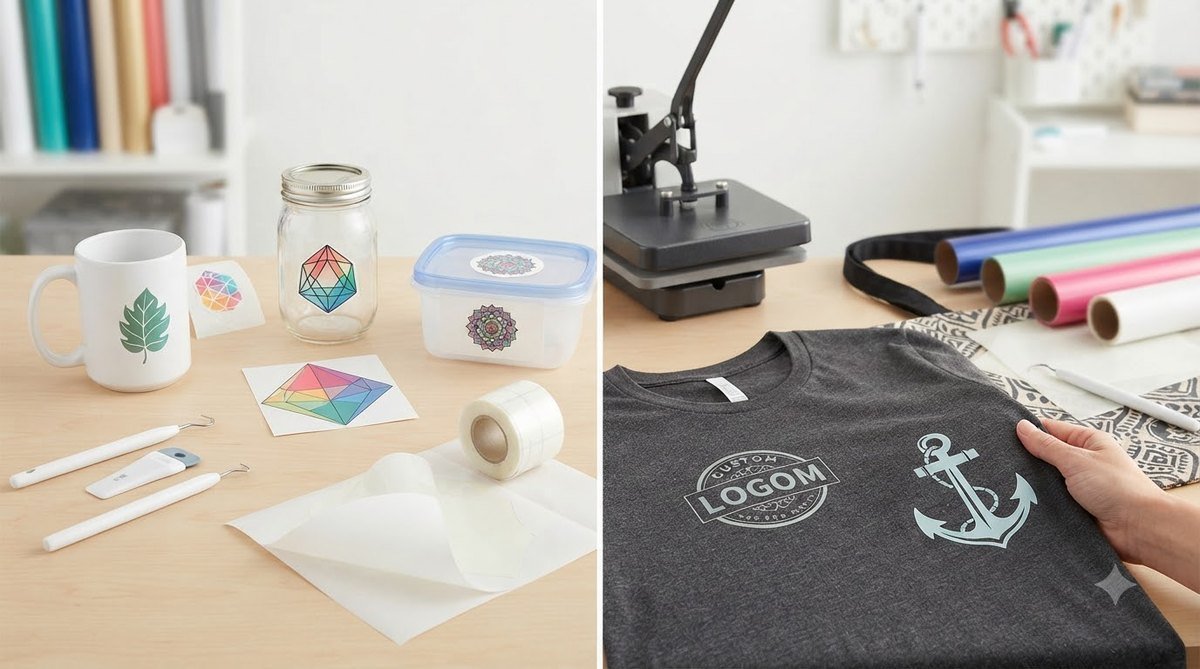
| Goes on | T-shirts, hoodies, tote bags, cushion covers, aprons | Mugs, tumblers, signs, windows, laptops, storage tins |
| Sticks by | Heat and pressure | A backing adhesive, pressed by hand |
| Applied with | A heat press or iron | Transfer tape and a scraper |
| Cut | Mirrored, shiny side down | Not mirrored |
| Weeded | Before pressing, carrier sheet left on | Before taping, backing left on |
The mirroring difference catches nearly everyone once. Heat transfer vinyl is cut back to front because it is applied face down through a carrier sheet. Adhesive vinyl is cut the right way round because you look at it from the front the whole time.
When the surface makes the decision for you
If the item goes in a washing machine, it is heat transfer vinyl. If it goes in a dishwasher, it is neither, and you want sublimation or a dishwasher-safe adhesive rated for it. If it lives on a wall, a window or the side of a box, it is adhesive.
The adhesive vinyl range splits further into permanent and removable, and that distinction matters more than colour. Permanent is for anything outdoors or anything that gets handled. Removable is for walls and rented windows, where the point is that it comes off cleanly later.
Transfer tape is not optional
This is the step people try to skip. Adhesive vinyl designs with more than one piece will not stay in position if you lift them by hand; letters rotate, spacing collapses, and a clean cut turns into a mess on the mug.
Transfer tape lifts the whole design at once and holds the spacing while you place it. Clear tape lets you see registration marks, which matters on anything with straight lines. A roll of transfer tape belongs in the same order as the vinyl itself, not the one after.
Bundles versus rolls, for each type
For adhesive work, mixed bundles of twelve by twelve inch sheets suit sign-making and small decals, where you want many colours and not much of each. Rolls make sense once a project needs long, continuous runs, such as lettering across a window or a set of matching storage labels.
For fabric, the logic reverses slightly. Garment designs tend to be larger, so heat transfer bundles in bigger sheet formats waste less than small squares would. Buy the format that matches the shape of what you make, rather than defaulting to whichever looks like better value.
The mistakes that look like material faults
Three failures come up again and again, and none of them are the vinyl’s fault.
The first is pressing adhesive vinyl. It is an easy mix-up when both materials are sitting on the same desk, and the result is a melted, shrunken mess and a platen that needs cleaning. Keeping the two in separate boxes is a genuinely effective fix.
The second is applying adhesive vinyl to a surface that was not degreased. Mugs and tumblers carry a film from handling and from the factory, and a wipe with isopropyl alcohol before application roughly doubles how long the design lasts.
The third is peeling a heat transfer carrier at the wrong temperature. Hot peel and cold peel are not preferences; the material specifies one, and getting it wrong lifts part of the design with the sheet. It is written on the product listing for a reason.
The quick test before you cut
Ask three questions. Is the surface fabric or hard? Will it be washed? Does it need to come off again one day? Fabric and washing means heat transfer. Hard and permanent means adhesive. Hard and temporary means removable adhesive. That covers almost every project without any further thought, and the full vinyl range is easier to navigate once you know which half you are shopping in.
More material explainers like this one appear regularly on flauntchic — worth a look before your next project starts.
 English