Most people buying a first heat press start with the wrong question. They ask which machine is best, when the useful question is what they intend to press. A machine that is perfect for tote bags and hoodies is the wrong shape for a travel mug, and a press that handles caps beautifully will never help with a phone case. Work backwards from the object and the choice narrows to one or two machines almost immediately.
HTVRONT’s UK range covers that spread, from a palm-sized press up to automatic machines aimed at weekly orders. Here is how the line divides.
Flat garments and fabric panels
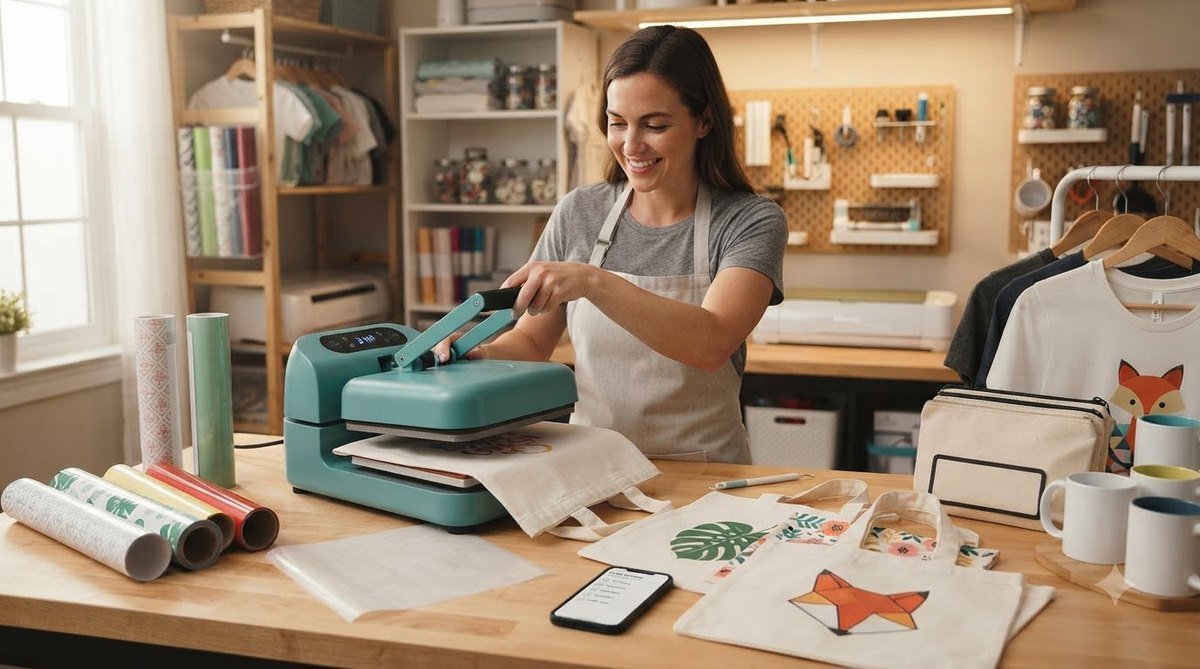
This is the bulk of what most crafters make: T-shirts, hoodies, tote bags, cushion covers, aprons. What matters is an even platen and consistent pressure across the whole design, because a transfer that lifts at one corner has failed regardless of the artwork.
The flat-bed presses in the range run from the Mini2 and Mini3, which are small enough to keep on a desk and are genuinely useful for pocket logos and small children’s clothing, up to the H10 at 12 by 10 inches, which handles a standard chest print comfortably. Above that sit the 15 by 15 inch Auto Heat Press and the Auto Heat Press 2, both of which close and time themselves.
Why automatic presses change the work, not just the speed
The jump from a manual clamshell to an automatic press is usually sold on convenience, but the real gain is repeatability. A manual press depends on how hard you pull the handle, which drifts across a long session as your arm tires. An automatic press applies the same pressure on the tenth garment as on the first.
That matters the moment you are making more than a handful of the same item. The Auto Heat Press 2 is built around this, and it is rated for DTF, HTV, sublimation and puff transfers, so one machine covers several methods rather than locking you into one. If you are pressing the same design forty times for a school or a club, the consistency is worth more than the time saved.
Curved and awkward shapes
Flat presses cannot do everything, and this is where people get caught out. Tumblers, mugs, water bottles, caps and phone cases all need contact around a curve, which means a dedicated plate. The range covers these separately: the A200 and the Auto Tumbler press handle drinkware, the A300 takes caps, and the H17 is built specifically for phone cases.
It is worth being honest that these are single-purpose machines. Buying one because you might make tumblers one day is how craft cupboards fill up with equipment that never gets used. Buy it when the orders exist, and look at the specialist presses only once flat work is running smoothly.
The range at a glance
| Press | Shape it handles | Suits |
|---|---|---|
| Mini2 / Mini3 | Flat, small area | Pocket logos, kidswear, one-offs |
| H10 12x10in | Flat, chest print | Regular garment work at home |
| Auto Heat Press 15x15in | Flat, full front | Larger designs, repeat batches |
| Auto Heat Press 2 | Flat, automatic | DTF, HTV, sublimation and puff in one machine |
| A200 / Auto Tumbler | Curved drinkware | Tumblers, mugs, bottles |
| A300 Auto Hat | Curved cap panel | Caps for clubs and events |
| H17 Phone Case | Small rigid case | Phone cases |
What to buy alongside the machine
Two accessories do more for print quality than most people expect. A heat press mat under the garment lifts the print area above seams, zips and collars, so pressure lands evenly instead of bridging across a raised edge. A PTFE or Teflon sheet over the design stops adhesive transferring onto the platen and protects delicate finishes.
Neither is glamorous, and both are frequently skipped by beginners who then blame the machine for patchy results. If you are ordering a press, add the matching mat and cover sheet to the same order rather than discovering you need them mid-project.
A shortlist that fits most people
If you are pressing occasionally and mostly small designs, a Mini press does the job without taking over a room. If garments are the main output and you want room to grow, the H10 or the 15 by 15 inch machine is the sensible middle. If you are already taking orders and repeating designs, an automatic press earns its place quickly. And if drinkware or caps are the plan, that needs its own machine rather than a compromise.
Whichever way you go, check the current heat press range before ordering, because stock and bundle contents shift.
We publish plain equipment comparisons like this one as ranges change, so keep an eye on flauntchic before your next craft purchase.
 English