A home gym rarely starts with a room full of equipment. It usually starts with one pair of dumbbells sitting in a corner, pulled out three evenings a week. That single purchase decides a surprising amount: whether you progress past the first month, whether you outgrow the weight in six weeks, and whether you end up buying the same thing twice. Getting it right the first time is mostly a matter of knowing which format suits the way you actually train.
What Separates One Set From Another
Dumbbells come in three shapes, and the right one depends far more on how you plan to add weight than on what the packaging says.
| Format | Works best for | Trade-off |
|---|---|---|
| Fixed hex dumbbells | One committed weight you will use for years | Every jump in load means another purchase |
| Fitness twin-packs | Training both sides at once from day one | Sold at the lighter end of the range |
| Disc-and-bar kits | Progressing gradually without rebuying | Changing weight between sets takes a minute |
Head shape is the other quiet variable. Rubber-coated hex heads sit flat, do not roll away mid-set and are kinder to a wooden floor, while bare cast iron packs the same load into a smaller shape. If you are weighing up a dumbbell set for a shared living space, that difference is worth more than it sounds at seven in the morning.
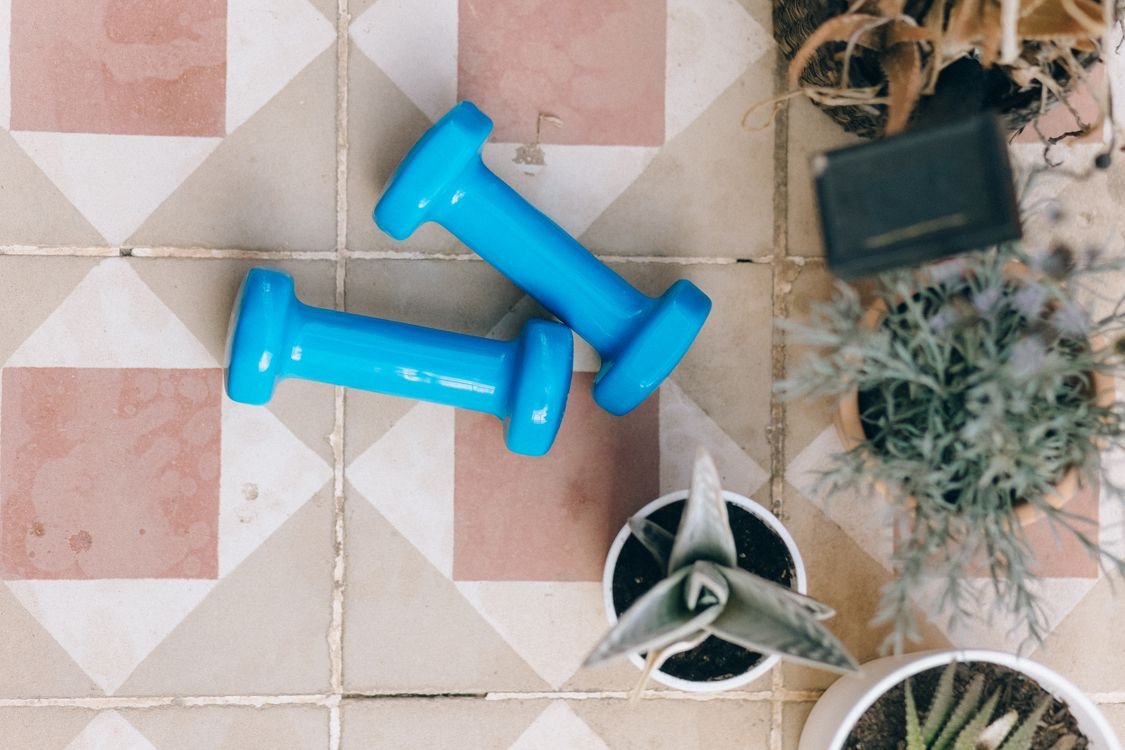
Six Dumbbells to Build Around
The fixed hex line alone runs from 2.5 kg up to 40 kg in 2.5 kg steps, so the shortlist below is less about what exists and more about where most people actually start and stop. All of it sits in the same cast iron dumbbells range.
2 kg Fitness Dumbbells Twin-Pack, Partially Recycled Cast Iron
The pair most people skip and then quietly buy later. Two kilos is right for shoulder raises, rear-delt work and rehab-style sets where control matters more than load, and a light pair keeps those exercises honest instead of turning them into swinging.
5 kg Fitness Dumbbells Twin-Pack, Partially Recycled Cast Iron
The sensible first purchase for anyone training both sides at once. Five kilos is the weight most people underestimate — it is plenty for overhead pressing, accessory sets and anything involving a lot of repetitions, and it stays useful long after you have added heavier pieces.
Hex Dumbbell Cross Training and Weight Training 10 kg
The workhorse. Ten kilos is heavy enough for rows, presses and goblet squats but still manageable for lateral raises if you slow the tempo down. The hexagonal rubber head is the detail that matters: it stays put between sets and doubles as a stable base for press-ups.
Hex Dumbbell Cross Training and Weight Training 15 kg
Where most people’s second fixed purchase lands. Fifteen kilos covers single-arm rows, heavier goblet squats and split squats, which are the exercises that stop progressing first when the only dumbbell in the house is a ten.
Dumbbell Weight Training Kit 10 kg Recycled Cast Iron
Bars, discs and collars in one box. The appeal is that the ten kilos is not locked into one shape: you can run light on isolation work and load up for the bigger lifts without owning two separate pairs.
Weight Training 20 kg Partly Recycled Cast Iron Dumbbells Set
The same idea with room to grow into. Twenty kilos across two bars covers most people for a long stretch, and because the discs are standard 28 mm they carry over to other 28 mm equipment later rather than becoming redundant.
Details People Overlook
- Buy the weight you can control for ten clean repetitions, not the one that looks impressive on the shelf.
- Hex heads stay where you put them; round heads roll, which matters more on a hard floor than you would expect.
- On adjustable kits, check the disc diameter before adding anything — 28 mm and 50 mm are not interchangeable.
- Collars are not optional once you move past light discs, and they are sometimes sold separately.
- A mat under the working area saves both the floor and your neighbours.
If you would rather compare the fixed and adjustable options side by side, the whole dumbbell range is laid out by weight.
The Bottom Line
If you are building up rather than buying everything at once, the order that tends to work is a light twin-pack first, one heavier fixed dumbbell second, and an adjustable kit once the cost of buying another fixed pair starts to sting. Start with a weight you can move well, choose a format that lets you add load without starting again, and let the range grow around what you actually train. Browse the full home gym dumbbells selection to see how the fixed and adjustable options compare before committing to a format.
For more equipment guides and gear breakdowns, keep flauntchic.com on your reading list.
 English